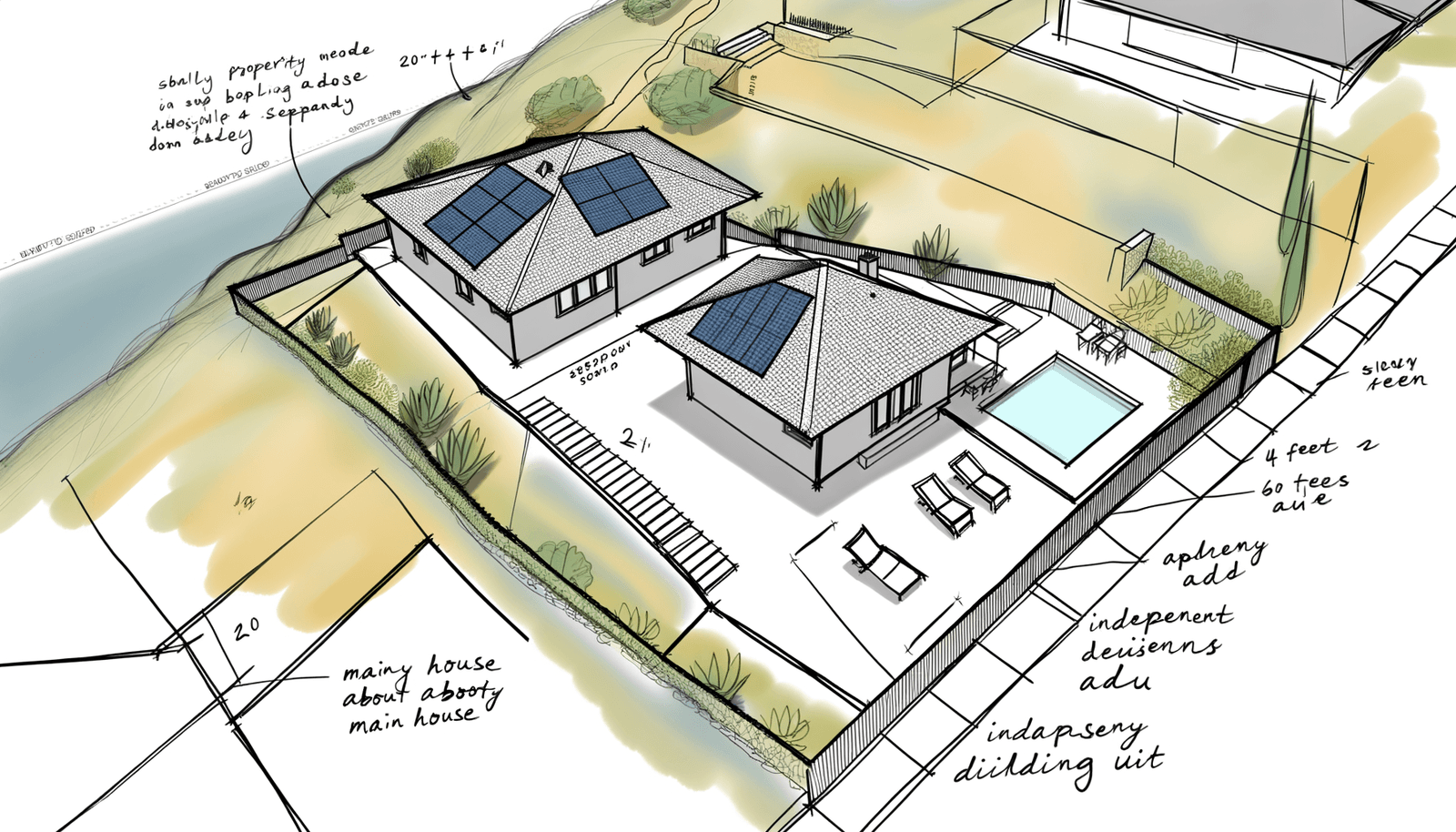
Navigating ADU and JADU Construction in Los Angeles' Hillside Properties
Accessory Dwelling Units (ADUs) and Junior Accessory Dwelling Units (JADUs) offer a fantastic opportunity to maximize the utility and value of your property, especially in a city like Los Angeles where the demand for housing is ever-increasing. However, developing these units on hillside properties can add layers of complexity that prospective developers must navigate carefully. In this guide, we’ll explore the regulations, requirements, and strategic steps you need to effectively undertake ADU and JADU construction at a property like 4206 Hazel Kirk Dr in Los Angeles, California.
Understanding the Property Profile
Before breaking ground, it’s crucial to assess the specific characteristics and constraints of your property. The example property, located at 4206 Hazel Kirk Dr, Los Angeles, CA, is zoned R1-1 for single-family residential use. With a lot size of 5,003 square feet and an existing structure built in 1936, this property lies within a designated hillside area. These factors will influence your planning and design process significantly.
ADU and JADU Development Options
Permitted Units
Accessory Dwelling Units (ADUs)
In R1-1 zones, you’re permitted to construct one ADU per lot, even on hillside properties, with some exceptions for wildfire and street-width conditions. You have the option to create attached, detached, or conversion types, such as transforming a garage or other existing accessory spaces.
- Maximum Size (By-Right): You can build up to 800 square feet with a height of 16 feet, provided you maintain four-foot setbacks at the sides and rear. Even smaller lots must allow this basic unit size.
- Parking and Setbacks: Generally, one off-street parking space is required unless your property is within half a mile of public transit or other exemptions apply. Hillside properties may have stricter requirements unless specific exemptions are met.
Junior Accessory Dwelling Units (JADUs)
JADUs must be constructed within the walls of the existing single-family dwelling, including attached garages.
- Max Size: 500 square feet.
- Requirements: They require an exterior entry, must meet Title 24 standards, and cannot be sold separately.
Hillside and Fire Hazard Restrictions
Properties in a "Very High Fire Hazard Severity Zone" (VHFHSZ) combined with a hillside designation face additional restrictions. ADUs are generally prohibited unless:
- The property is within certain community plan areas like Silver Lake or Echo Park.
- Conditions such as an automatic fire sprinkler system and adequate street width (20 feet unobstructed) are satisfied.
It’s essential to verify your property’s VHFHSZ status through local resources such as the Los Angeles Department of Building and Safety (LADBS).
Development Standards and Restrictions
Setbacks and Floor Area Ratio
While setbacks for new detached or attached ADUs are four feet from the side and rear, converting existing structures often requires no additional setbacks. Notably, Floor Area Ratio (FAR), lot coverage, or minimum lot size regulations do not impede the construction of an ADU up to 800 square feet.
Nonconforming Conditions
Existing nonconformities on the lot do not prevent the addition of an ADU or JADU. Furthermore, no additional passageways are required.
Permit Requirements
Ministerial (By-Right) Approval
ADUs up to 800 square feet and 16 feet in height enjoy ministerial approval, meaning only objective standards apply, and LADBS must act on applications within 60 days.
Discretionary Review
For larger ADUs or those requiring exceptions, discretionary permits involve more extensive review processes, possibly including public notices or hearings.
Maximizing Yield
To make the most of your property:
- By-Right Configuration: Aim for one 800-square-foot ADU and one 500-square-foot JADU.
- Reuse Opportunities: Consider converting existing spaces like a garage to minimize setbacks and simplify construction.
Practical Advice and Next Steps
- Confirm VHFHSZ Status: Use local resources to determine if your property is in a fire hazard zone.
- Verify Street Width: Ensure your street meets the minimum width requirement if in a VHFHSZ.
- Explore Conversion Options: Utilize existing structures for potential ADU or JADU conversion.
- Evaluate Parking and Utilities: Plan for necessary changes or additions before engaging professionals.
Conclusion
Constructing ADUs and JADUs on hillside properties in Los Angeles involves navigating complex regulations but offers significant rewards in terms of property value and utility. By understanding the specific requirements and leveraging your property’s existing features, you can successfully develop additional units that meet both your needs and regulatory standards.
Stay informed, consult with local experts, and make sure every step aligns with the latest zoning and building codes. Whether you’re maximizing space for family use or rental income, the strategic development of ADUs and JADUs can be a valuable addition to your real estate portfolio.