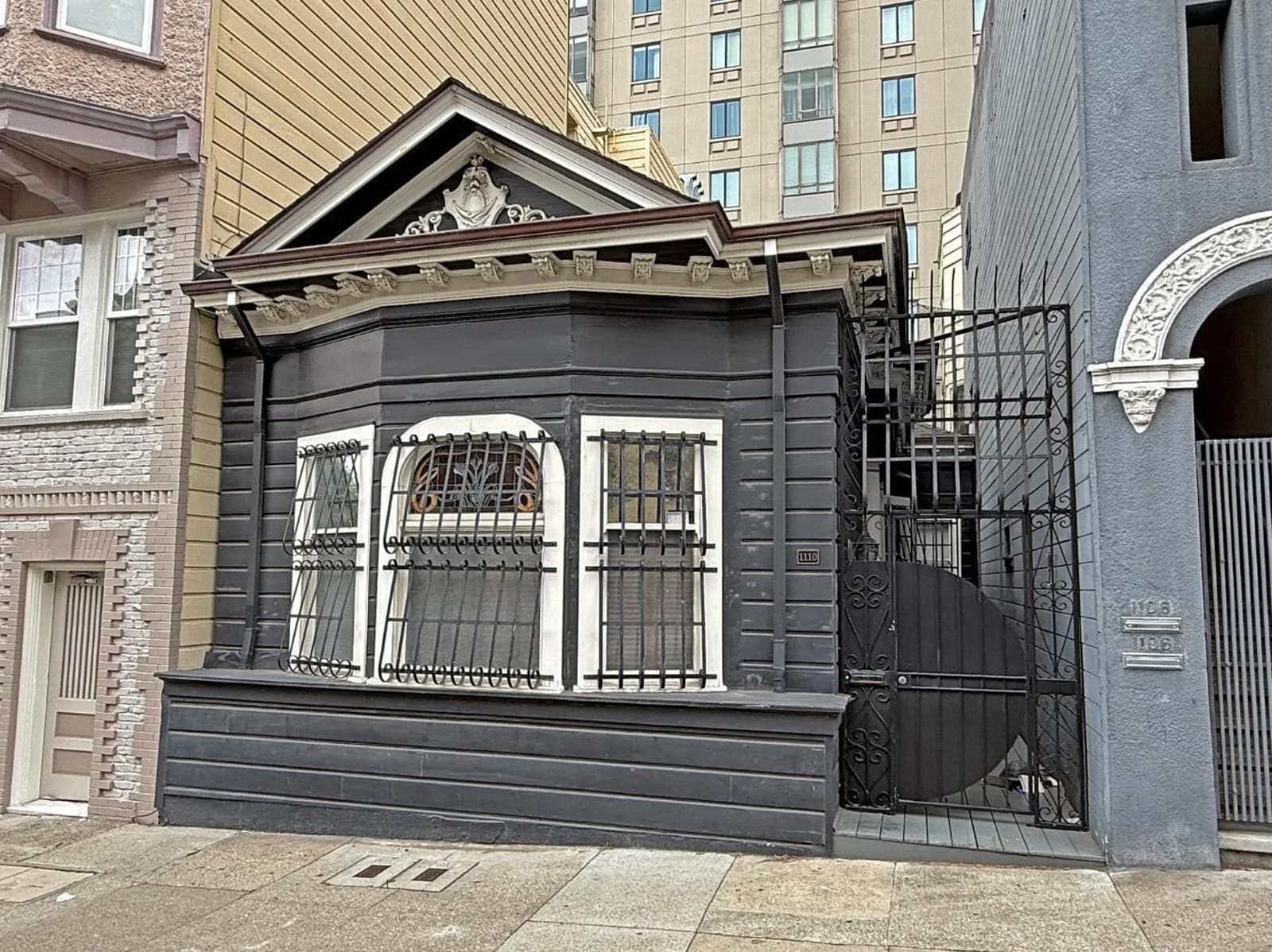
Property Advisory Report: Ground-Up Construction Feasibility at 1110 Taylor St, San Francisco, CA
Executive Summary
This advisory report evaluates the feasibility of ground-up construction at 1110 Taylor St, San Francisco, CA. The property falls under the RM-3 zoning designation, with additional constraints due to its historic resource status. The primary goal is to assess the potential for new construction while navigating the complex regulatory landscape, including zoning, historic preservation, and tenant protection laws. Key findings indicate significant challenges due to the historic designation and tenant displacement regulations, necessitating careful planning and compliance with multiple layers of city and state regulations.
Property Overview
- Address: 1110 Taylor St, San Francisco, CA 94108
- Size: 2 bed 1 bath, 1,649 sqft
- Price: 1.7M USD
- Jurisdiction: City and County of San Francisco, California
- Parcel Characteristics:
- Lot Size: 1,840 square feet
- Dimensions: Approximately 35 feet wide by 83 feet deep
- Current Use: Single-family
- Zoning Designation: RM-3 (Residential Mixed, Medium Density)
Regulatory Analysis
Zoning and Development Standards
The RM-3 zoning district allows for both single-family and multifamily residential developments. However, the density and bulk of the development are subject to specific regulations:
- Height Limit: The property is within the 65-A Height/Bulk District, which imposes a maximum building height of 65 feet.
- Density and Use: While single-family construction is permitted, increasing the number of units would require adherence to density regulations specific to the RM-3 zoning and any additional requirements from the Special Use District (SUD) overlay.
- Lot Size and Shape: The lot size of 1,840 square feet is below typical large lot standards but is adequate for a small single-family home or potentially a duplex/Accessory Dwelling Unit (ADU).
Historic Resource Considerations
The property is classified as a Known Historic Resource under CEQA Category A, which imposes stringent requirements for any demolition or alteration:
- Demolition Permit: A Permit to Demolish must be obtained from the Historic Preservation Commission (HPC) as per Planning Code Article 11, Section 1110.
- Compatible Replacement Building: Any new construction must be approved as a Compatible Replacement Building by the HPC, ensuring it aligns with neighborhood character, massing, and materials.
- CEQA Review: A comprehensive CEQA review is mandatory, potentially requiring historical evaluations and an Environmental Impact Report (EIR) if the project impacts historic resources.
“No person shall carry out or cause to be carried out any construction, alteration, removal or demolition of a structure...on any designated Significant or Contributory Building...unless a permit for such work has been approved pursuant to the provisions of this Article 11.”
Permit Requirements
Given the property's characteristics, several permits and approvals are necessary:
- Historic Preservation Approval: This is the first step before any planning or building approvals.
- Planning Approval: Required for all new construction within the RM-3 zoning district, ensuring full compliance with zoning regulations.
- Tenant Protections: San Francisco’s Administrative Code Chapter 37.9 protects tenants from eviction due to demolition. Compliance with tenant relocation, compensation, and notification requirements is mandatory.
- Environmental Health/Dust Mitigation: A dust control plan must be submitted, and the site must be evaluated for potential hazardous waste under the Maher Ordinance.
- Building Permit: Must adhere to San Francisco and California Building, Fire, and Green Codes, with additional requirements for projects involving historic resource demolition.
Special Development Rules
- Green Building/Sustainability: Demolishing a historic building and constructing new will require increased LEED or GreenPoint compliance targets.
- Construction Debris Management: A waste management plan is required to document recycling and diversion of construction and demolition debris.
- Site-Specific Restrictions: The SUD overlay may offer incentives or impose specific design constraints, particularly for family or senior housing projects.
Feasibility Assessment
Allowed Developments
- Single-Family Home: Permitted under current zoning regulations, provided it complies with height and bulk standards.
- Duplex/ADU: Feasible within the lot size constraints, subject to density regulations and potential SUD incentives.
Required Approvals
- Historic Preservation: Essential for any demolition or new construction due to the historic status.
- Tenant Relocation and Compensation: Must be addressed in compliance with local and state laws.
Prohibited or Infeasible Developments
- Demolition Without Approval: Prohibited due to historic resource status and tenant protection laws.
- Non-Compliant Density Increases: Any increase in density beyond RM-3 allowances without proper approvals is infeasible.
Key Findings & Recommendations
- Historic Resource Compliance: Engage with the Historic Preservation Commission early to understand requirements and timelines.
- Tenant Protection Strategy: Develop a comprehensive plan for tenant relocation and compensation in line with San Francisco’s stringent regulations.
- Environmental and Health Compliance: Prepare necessary environmental health documentation, including dust control and hazardous waste evaluations.
- SUD Incentives and Constraints: Explore potential incentives or constraints under the Family and Senior Housing Opportunity SUD.
- Professional Consultation: Engage a land use attorney and design professional experienced in historic resource and tenant-occupied properties.
Permit & Approval Roadmap
| Step | Agency | Estimated Timeline |
|---|---|---|
| Historic Preservation Approval | HPC | 6-12 months |
| Planning Approval | SF Planning Department | 3-6 months post-HPC approval |
| Environmental Health Compliance | SF Department of Public Health | 1-3 months |
| Building Permit | SF Department of Building Inspection | 3-6 months post-Planning Approval |
Conclusion
The proposed ground-up construction at 1110 Taylor St is feasible but requires careful navigation of historic preservation, zoning regulations. The property owner should prioritize obtaining historic preservation approval. Engaging with professionals experienced in these areas will be crucial to successfully advancing the project.
Next Steps
- Consult with Professionals: Engage a qualified design professional and a land use attorney familiar with historic resource.
- Historic Resource Evaluation: Begin with a thorough evaluation of the historic resource status and plan for extended timelines due to multi-layered review processes.
- Coordinate with City Agencies: Initiate early coordination with the Planning Department’s Historic Preservation and Zoning Specialists to streamline the approval process.